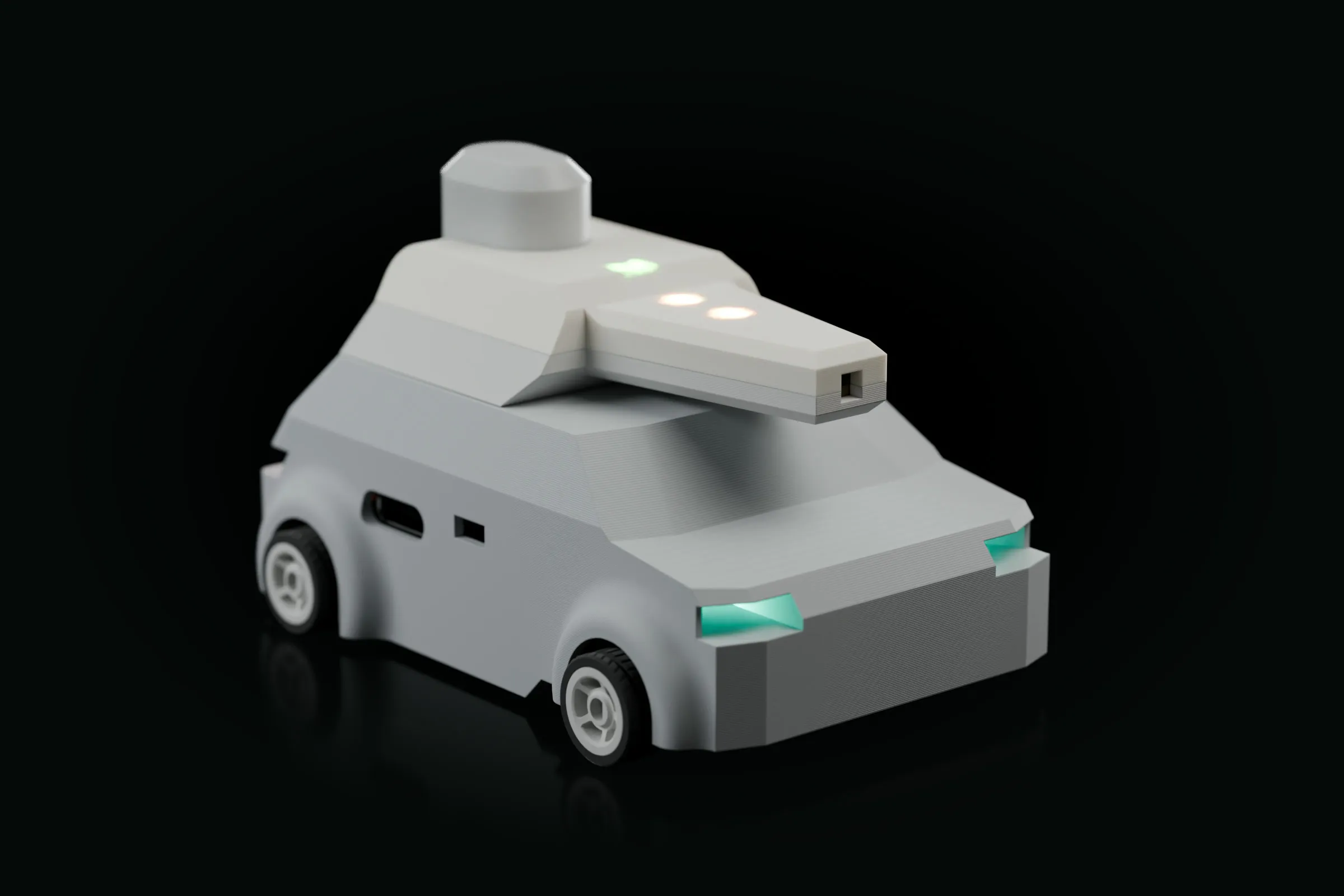
Rendered from our PCB & CAD files
Palm-sized combat racing, built from the circuit board up.
A palm-sized racer whose circuit board is its chassis. Clip on the IR turret and it fights: weapons charge, fire and spin a rival out. Coloured zones on a 3D-printed track trigger spinouts, refuels and lap times, and an app runs the race.
- weapons, each with its own recharge time and hit penalty
- 4
- from flat to a full charge over USB-C, measured on the car
- 110 min
- to send one IR shot, tagged with the attacker and weapon
- 24 ms
- lap on the 41-piece Circuit One track
- 6.1 m
The story
The challenge
Most RC toys stop at “drive it around”. We wanted a platform for real games: cars that know where they are on the track, can shoot each other and keep score — small enough to race on a tabletop, and simple enough to build a whole grid of them.
What we built
We started from StuckAtPrototype’s open-source Micro Racer, a car whose PCB doubles as its chassis, and turned it into a combat racing system: a colour-sensor board that reads the track, a plug-in IR turret, a modular 3D-printed circuit, a reworked handheld controller, game firmware and a multiplayer app.
- 01
Pair
Cars are found over Bluetooth LE and claimed into your garage in the app.
- 02
Lobby
A host opens a lobby and friends join with a code — up to four cars on the grid.
- 03
Race
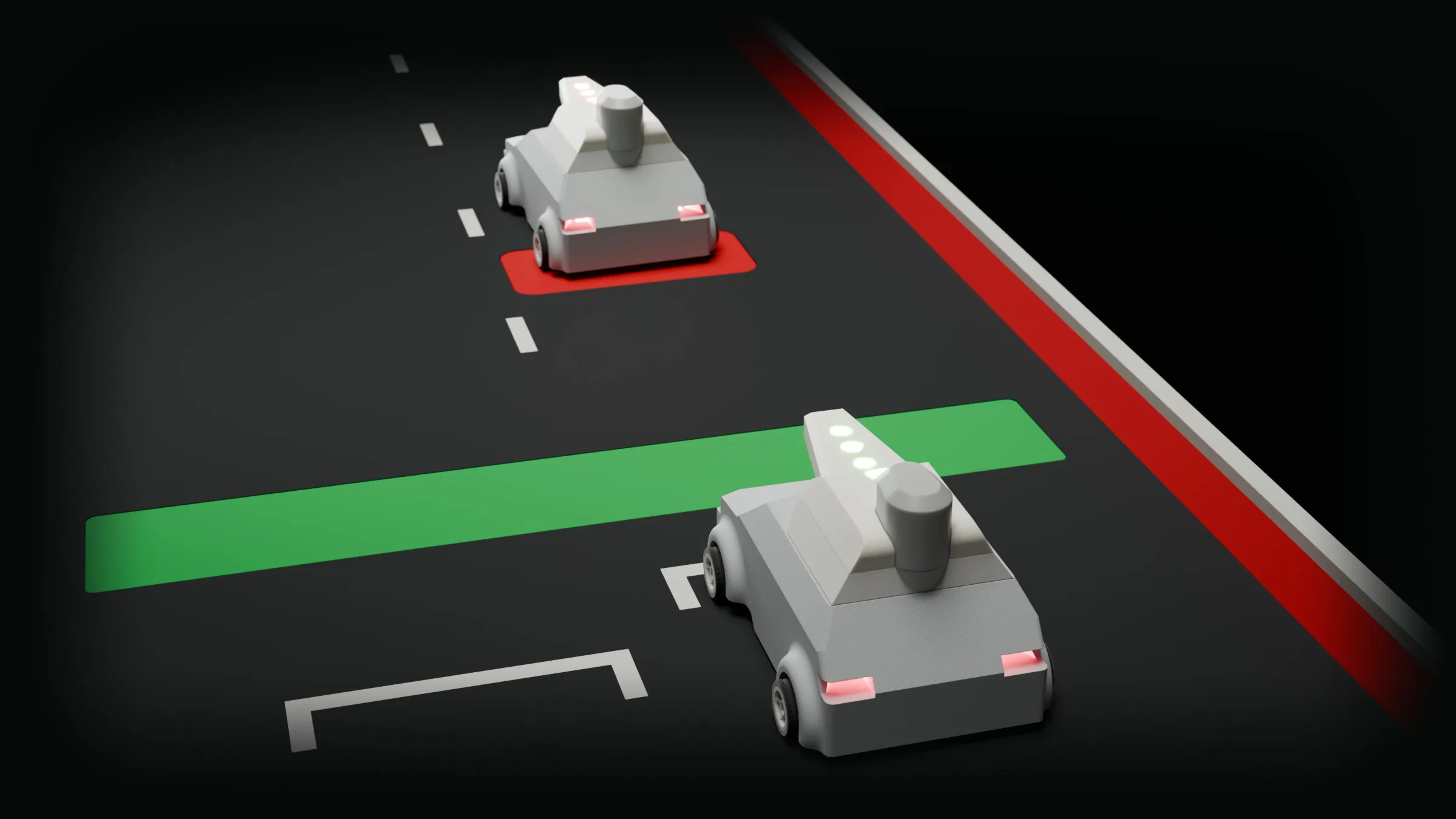
The colour sensor reads the track: green counts laps, red spins you out, blue pit plates refuel.
- 04
Fight
Turrets charge, fire when full and spin a hit rival out. Laps and hits feed the leaderboard.
Combat
Four weapons. One rule: charge, then fire.
The turret’s LEDs fill as it charges, and it fires when full — kicking the shooter back. A hit spins the target out and locks its motors; the weapon decides how hard.
| Weapon | Recharge | On a hit |
|---|---|---|
| Rapid Fire | 1 s | A jolt, 1 s stun |
| EMP Cannon | 6 s | Dead stop, 6 s stun |
| Laser Blaster | 10 s | 1 s spin-out |
| Bazooka | 10 s | Big spin, 3 s stun |
Capabilities
What makes Zappit Racer different.
-
The car is the circuit board
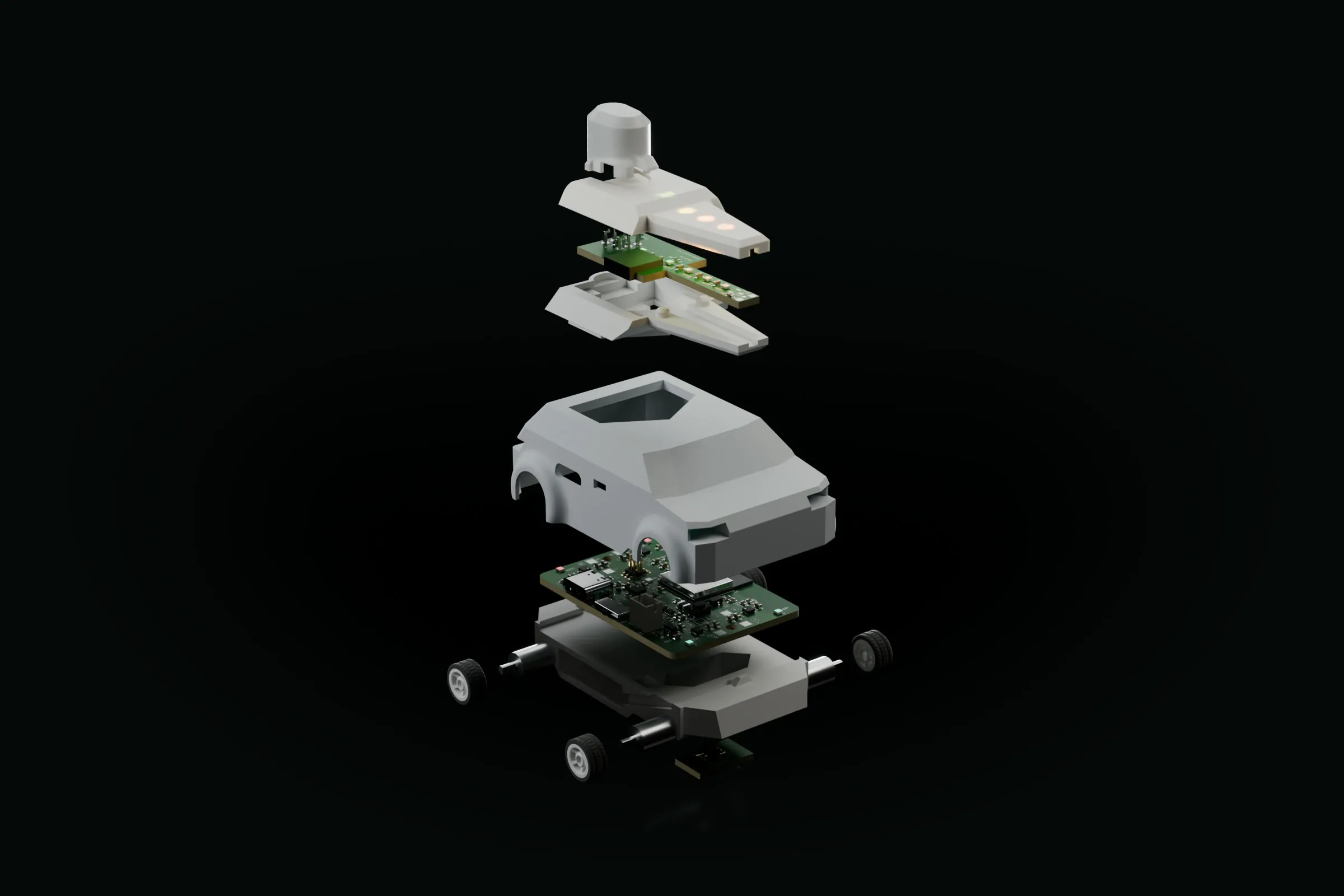
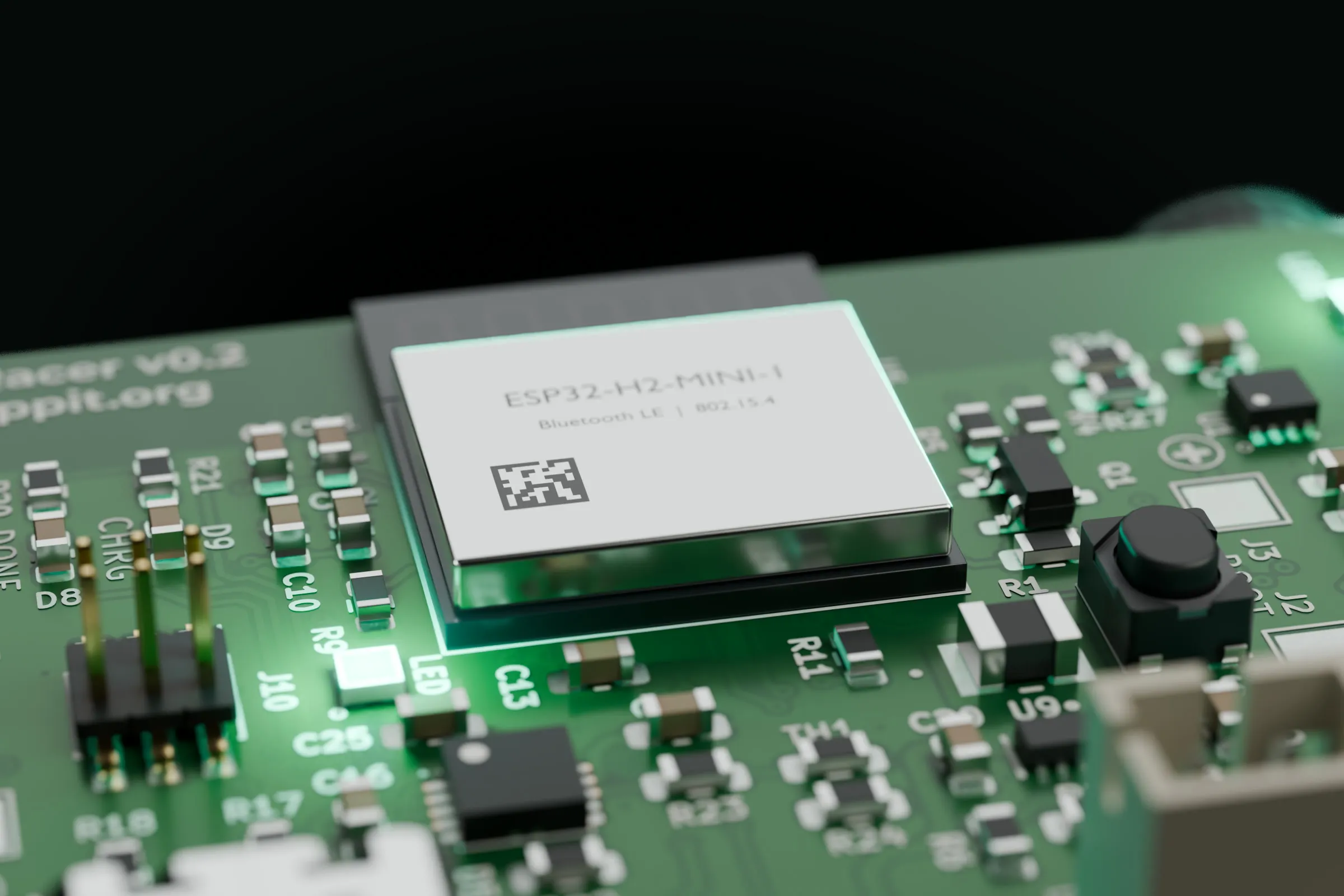
An ESP32-H2 board doubles as the chassis: four motor drivers, USB-C charging and five addressable LEDs on a 36 × 50 mm, four-layer PCB.
-
IR combat turret
A plug-in board with an IR transmitter, a 38 kHz receiver, five LEDs and a buzzer — driven by the car’s own processor, so there’s no second chip.
-
Track-aware sensing
A colour sensor under the car reads the road: red spins you out, green is the lap line, and fuel runs down lap by lap until you refuel on the blue pit plates.
-
Modular race track
Circuit One: 41 printed road pieces with dovetail joints, kerbs and walls, making a 6.1 m lap.
-
App-run races
A Flutter app pairs over Bluetooth, opens lobbies that friends join with a code, and runs four-car races with lap times, hits and leaderboards.
-
Handheld controller
The Thumbtroller: a thumb-joystick remote on its own ESP32-H2, reworked with a fire button and pivot controls.
-
Fails safe
Drive commands carry a dead-man timer. If the app or the link drops, the car stops on its own within 300 ms.
-
Designed to be printed
Chassis, turret housings and track pieces are modelled parametrically in FreeCAD and print-tested on real printers.
Inside the product
From the CAD to the track.
The app
Race night, in your pocket.
-
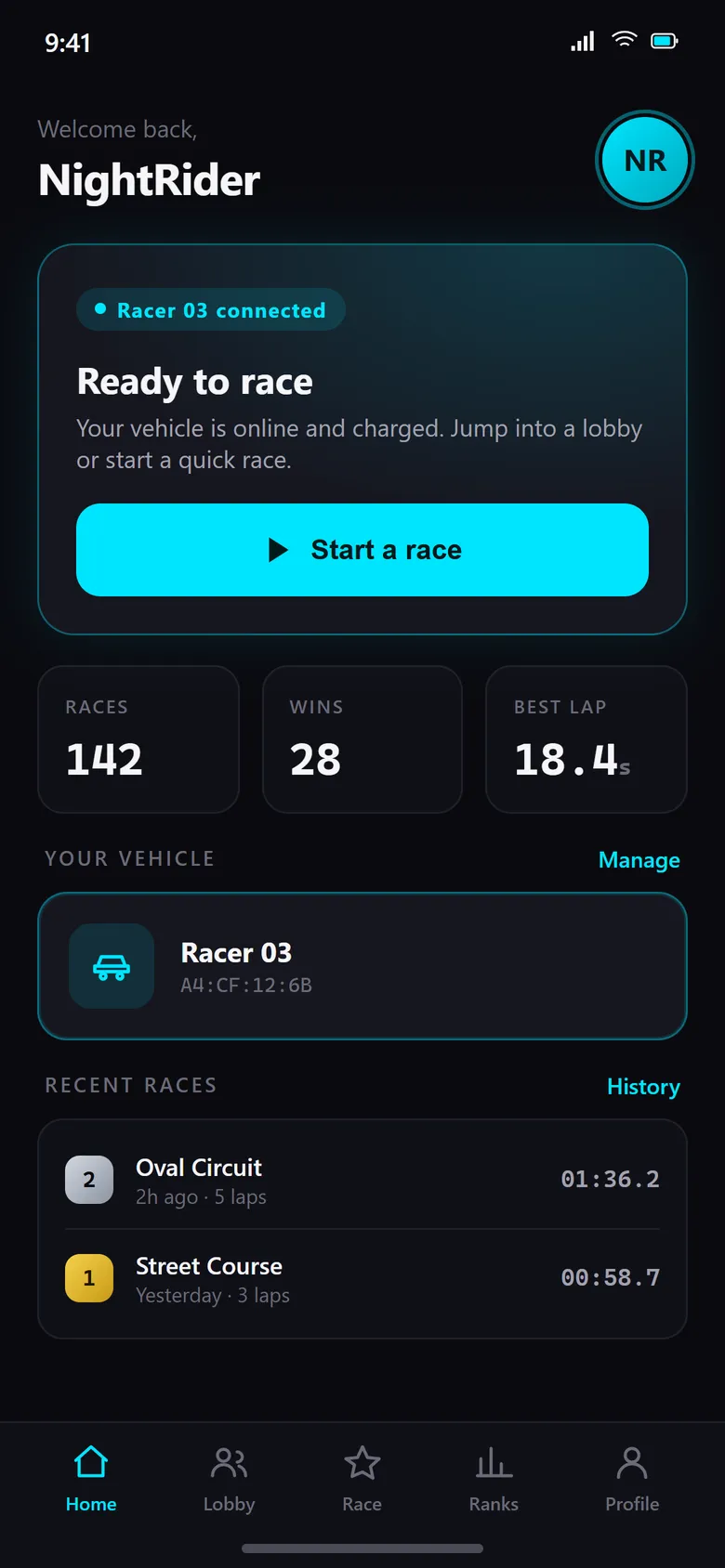
Garage
-
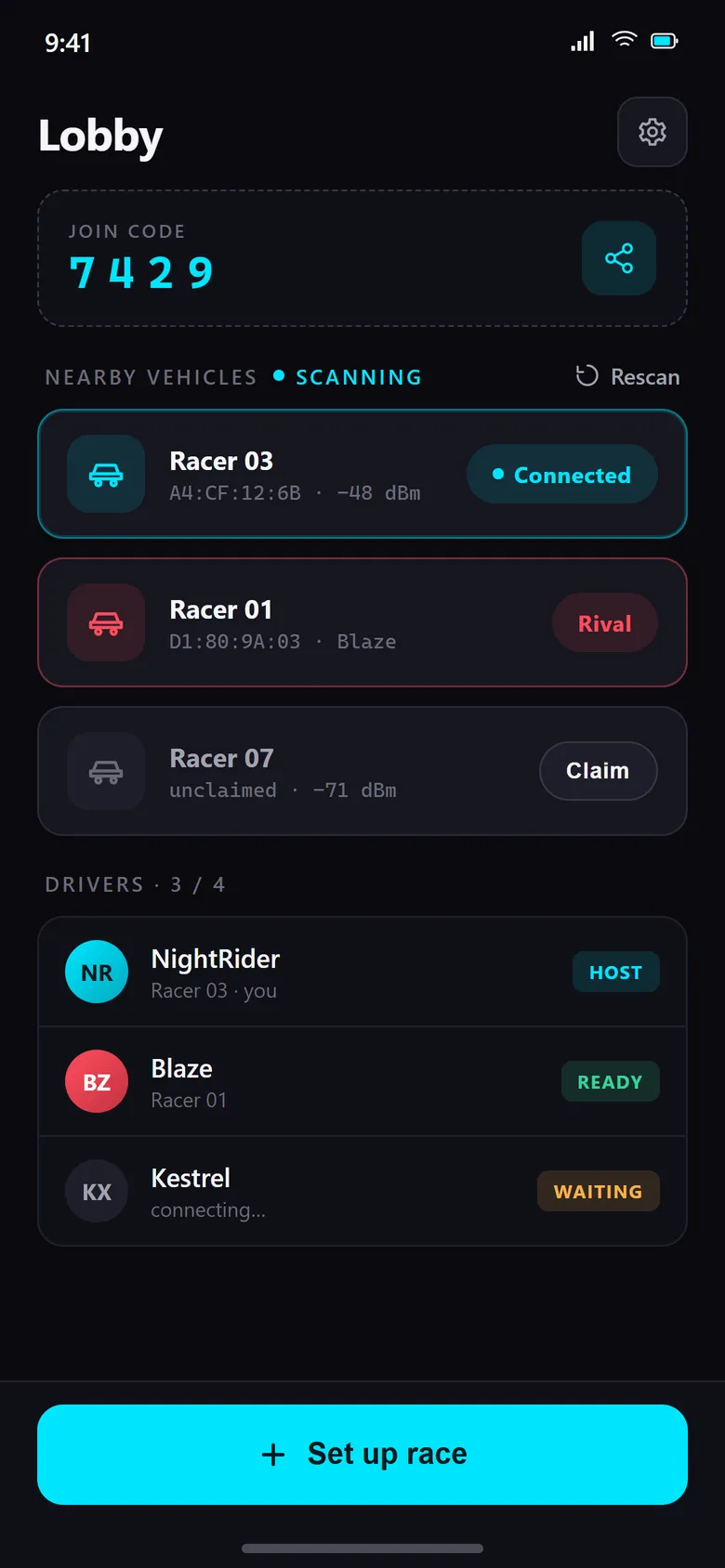
Lobby
-
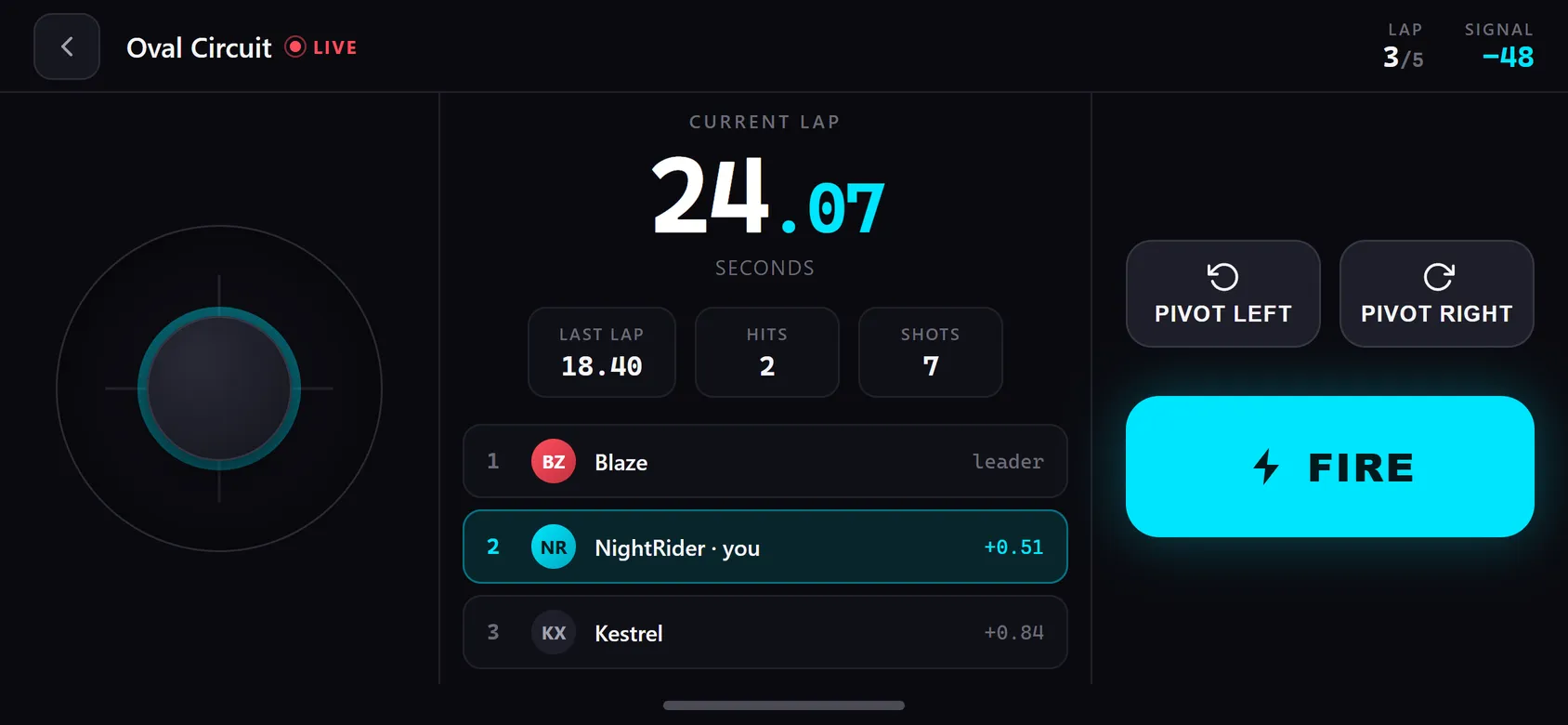
Live race
-
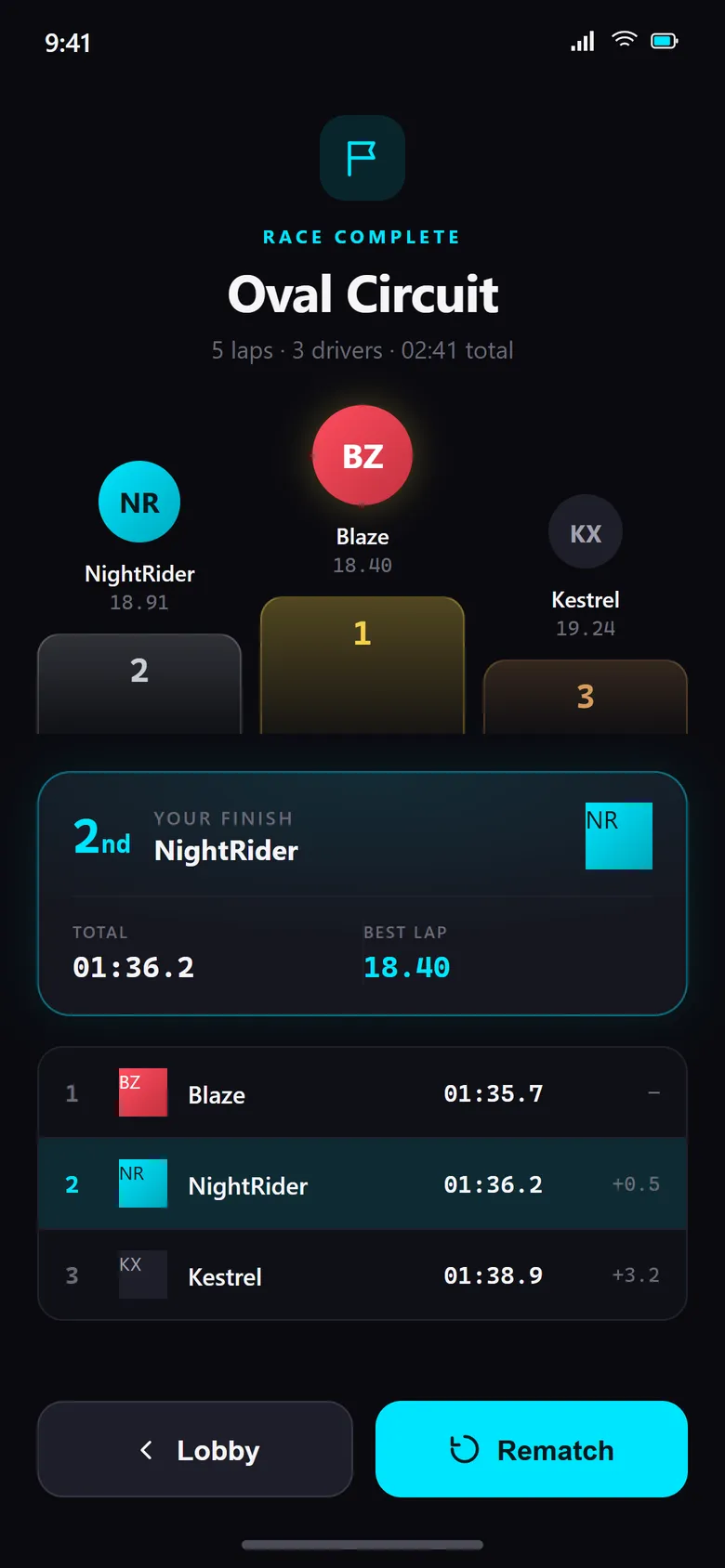
Results
-
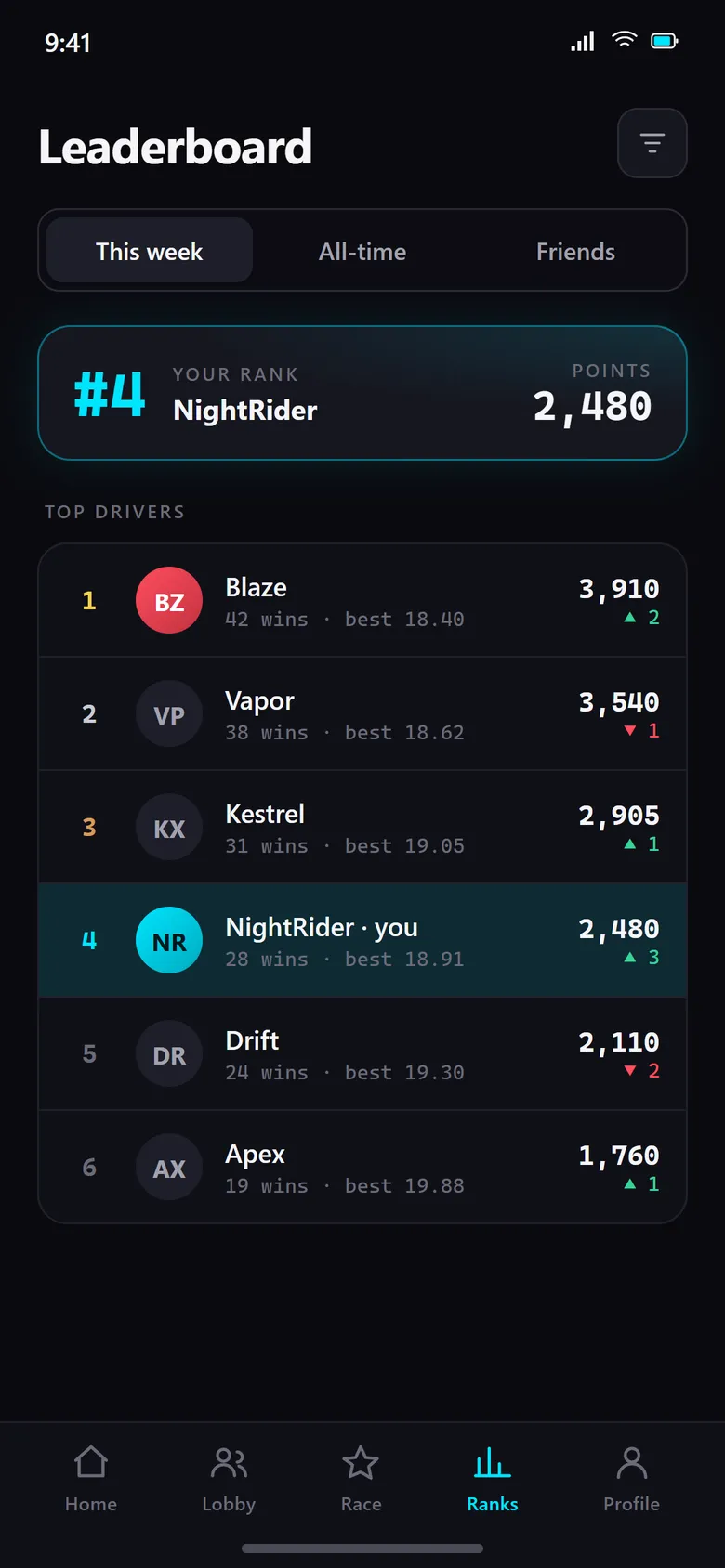
Leaderboard
Engineering
Under the hood.
Hardware is where AI-first meets real constraints: no agent can reflow a solder joint. Our engineers owned the boards, bring-up and testing on real track, while AI-assisted development sped up the firmware, the app, the backend and the parametric scripts that generate the track.
-
Firmware in C on ESP-IDF 5.3 and FreeRTOS, with the NimBLE stack. Each car is a Bluetooth LE peripheral that accepts several connections and takes firmware updates over the air.
-
Weapon logic lives on the car. The turret board is passive: the main ESP32-H2 drives its LEDs, IR transmitter, receiver and buzzer through a single 6-pin connector.
-
Every shot is an NEC-style IR packet carrying the attacker, team and weapon, protected by a CRC and on the air for about 24 ms.
-
Colour classification is tuned against real OPT4060 sensor readings on printed track, and magnets set into the lap and spinout strips give a second check through a Hall sensor, so one pass over the line counts as one lap.
-
Boards are designed in KiCad, panelised for pick-and-place assembly with fiducials and tooling holes, and costed against real supplier pricing.
-
The app resends drive commands every 100 ms against a 300 ms dead-man timer, and a Xano backend handles accounts, garages, lobbies, lap and hit events and leaderboards.
Have a product like this in mind?
We’ll bring the same AI-first process and senior engineering to your idea.